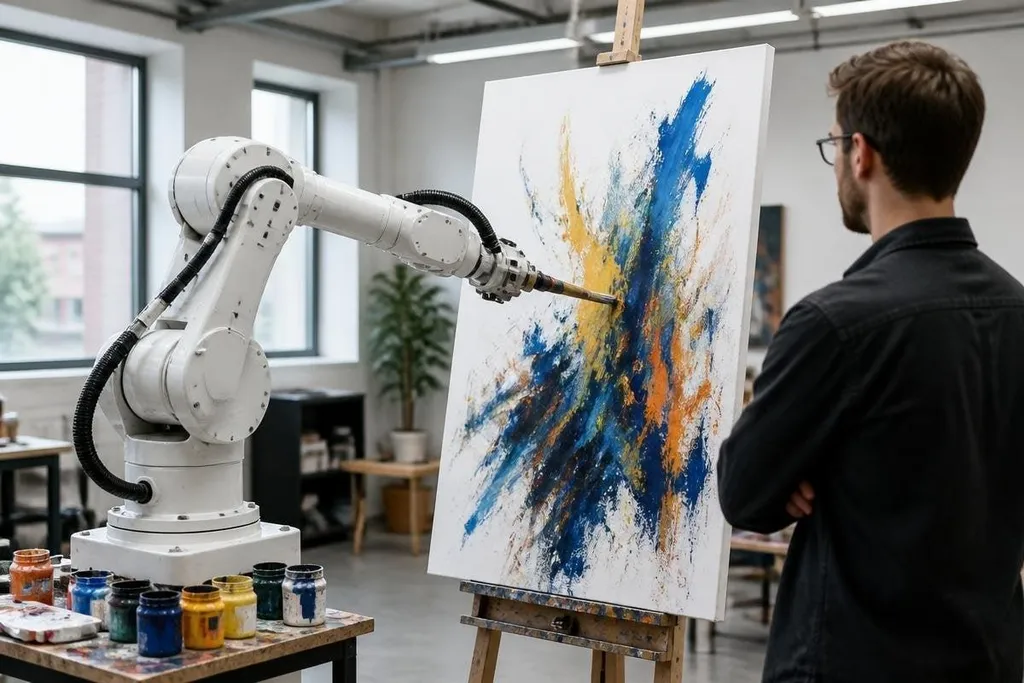
When a robot draws, paints, or shapes objects, it creates more than a finished piece. It also creates a service, a live event, a software process, or a set of rights that a company can sell.
The business question is simple: who pays, what do they receive, and how often can the work happen? Without clear answers, robot art stays a demo with a price tag attached.
- Sell the work: Offer finished prints, objects, or commissioned pieces.
- Sell the event: Bring the robot to museums, fairs, stores, or company sites.
- Sell the system: License the software, tools, or process behind the work.
Finished work is the first market
A buyer may pay for a print made by a robot, a carved object, or a custom image. The robot's role gives the piece a clear story, yet the story won't carry the sale on its own.
The seller still needs to define the size, material, finish, delivery method, and price. A signed physical piece has a different cost structure from a digital file, because it adds materials, packing, storage, and shipping.
Custom work can raise the order value. A customer might request a pattern based on a location, a company mark, or a personal image. That work also takes more setup time, so the price needs to cover design changes and failed runs.
Live robot art can sell access
A live drawing gives a venue a timed activity rather than a static display. The buyer may be a museum, retailer, festival, hotel, or company running a public event.
That buyer pays for the appearance, setup, staff, transport, and time on site. The contract should state who owns the finished work, who handles damage, and what happens if the robot stops during the event.
Live work has a second income path. Visitors can buy small pieces made during the session, while the host pays for the main appearance. The two offers should stay separate so the event fee does not depend on uncertain visitor sales.
Software and licensing change the margin
One robot art project may include a path planner, a drawing tool, a vision system, or a method for turning images into robot motion. Those parts can be sold to schools, studios, research groups, and other operators.
A license can cover one robot, one site, or a set period. The contract also needs rules for updates, support, copied outputs, and use in paid public work. Those details matter because software costs can continue after the first sale.
The hardware still sets a limit. The machine may need a special tool, a trained operator, a safe work area, or a fixed surface. A business that sells the software without accounting for those needs may create support work that the price never covers.
A founder pricing robot art needs evidence about the machine behind each project, not only the finished image. Robot24.com robotics coverage can place those projects beside the robot’s limits and the staff time they need. That record helps set a price before the next section looks at education as a steadier market.
Education may be steadier than art sales
Schools and training centers can use robot art to teach programming, motion planning, computer vision, and machine safety. The customer receives a class project with a visible result, which can make abstract code easier to discuss.
A course package could include lesson files, robot instructions, sample inputs, and a safety plan. The seller can charge for the teaching material, setup help, or scheduled instruction without relying on each student buying a finished artwork.
This path still needs a clear machine requirement. A lesson written for a robot arm with a pen won't transfer neatly to a mobile robot with a spray tool. The offer should name the hardware and the task before a school commits.
Rights can matter more than objects
A brand may pay to use robot-made images in packaging, advertising, or a store display. In that case, the contract needs to cover the image, the robot's appearance, the recording of the process, and the length of use.
The artist or company should also decide who owns the source files and whether the buyer can alter the result. A low fee for broad rights can leave little room for later sales, while a narrow license can support repeat income from the same work.
I’d start with paid services and education, then add finished pieces once the process runs reliably. Those offers test demand without forcing the company to guess how many artworks people will buy.
A practical business check
Before spending on a robot art product, check these points:
- Name the buyer: Write down the person or organization that signs the contract.
- Price the full job: Add materials, operator time, setup, travel, repairs, and delivery.
- Set the output: State the exact object, file, lesson, event, or license the buyer gets.
- Plan the failure: Decide how you handle a missed deadline, damaged work, or stopped robot.
- Protect the rights: Record ownership, edits, reuse, recordings, and sales of later copies.
The strongest starting offer is the one with a clear buyer and repeat use. Robot art becomes a business when the machine can make the same paid process work again, with costs that stay visible from the first quote to the final handoff.